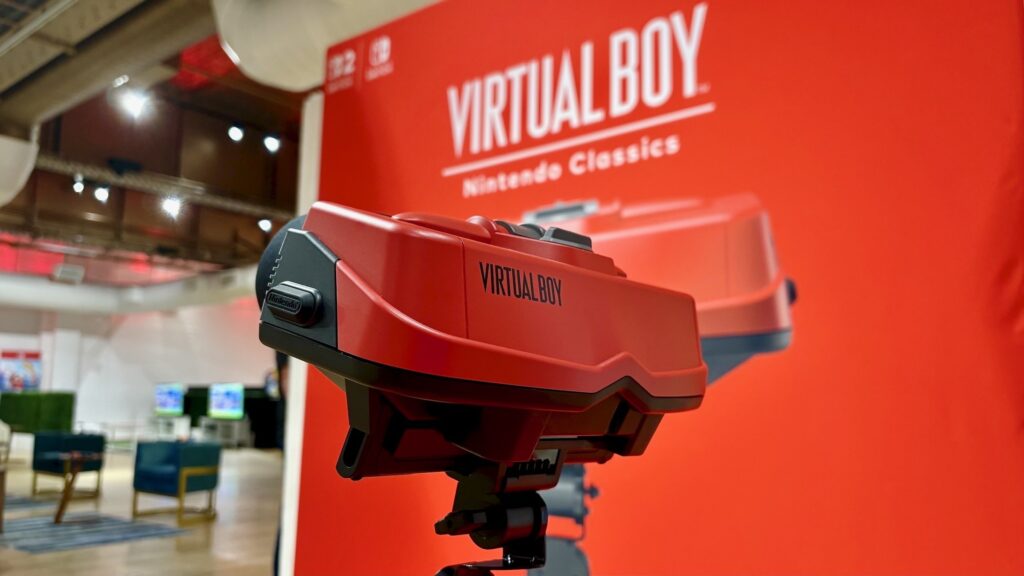
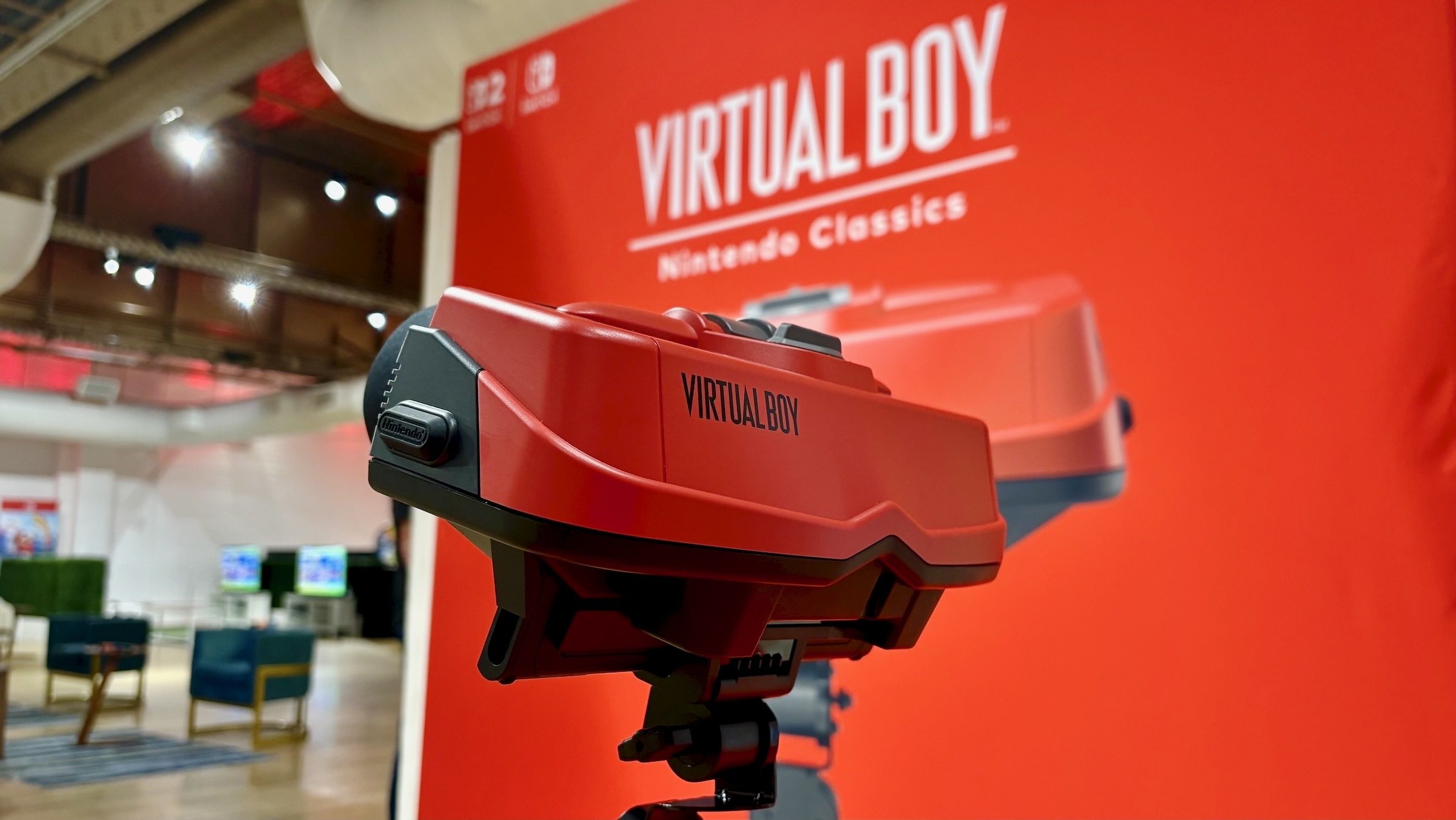
In September 2025, Nintendo announced something I never thought I would see: The triumphant return of the Virtual Boy. This was easily the biggest and most embarrassing hardware failure in the company’s history.
Thirty years is apparently long enough to get over the shame, though, because Nintendo is bringing Virtual Boy games to the Nintendo Switch Online subscription service on Feb. 17. You won’t be able to play them on your TV. Instead, you’ll need a $99 add-on that recreates the console’s two-legged original form factor, which you shove your Switch or Switch 2’s handheld screen into. There’s also a $24.99 cardboard alternative, in case $99 is too much for you.
I got hands-on time with the more expensive Virtual Boy accessory at a Nintendo preview event, and I’m pleased to report that all of the cornerstones of the Virtual Boy experience are present … for better and worse.
What matters is that it’s faithful
Nintendo launched the Virtual Boy in 1995, when the Super Nintendo Entertainment System was in its twilight and the next-generation Nintendo 64 still a year away.
The Virtual Boy sat between a home console and a fully portable handheld device like the Game Boy; it didn’t plug into a TV, but it stood on two legs and needed a flat surface to play on, as well as several batteries or a power adapter. It promised stereoscopic 3D gaming, at a time when the mere notion of a third dimension was relatively novel.
And yet, few bought it. Those who did complained of neck and eye strain, because you had to shove your face into the module to play games on it. Games were only displayed in red and black, which was not the most pleasing aesthetic. Only 22 Virtual Boy games were ever released, and few were memorable. Nintendo withdrew the product in 1996.
Fast forward to 2026, and the Virtual Boy is back on Nintendo Switch and Switch 2. Even a few minutes with the peripheral told me basically everything I needed to know. I got to sample the Feb. 17 launch lineup, which includes Wario Land (generally considered the best game on the platform), Teleroboxer, 3-D Tetris, and a game called The Mansion of Innsmouth that was previously only released in Japan.
Credit: Alex Perry/Mashable
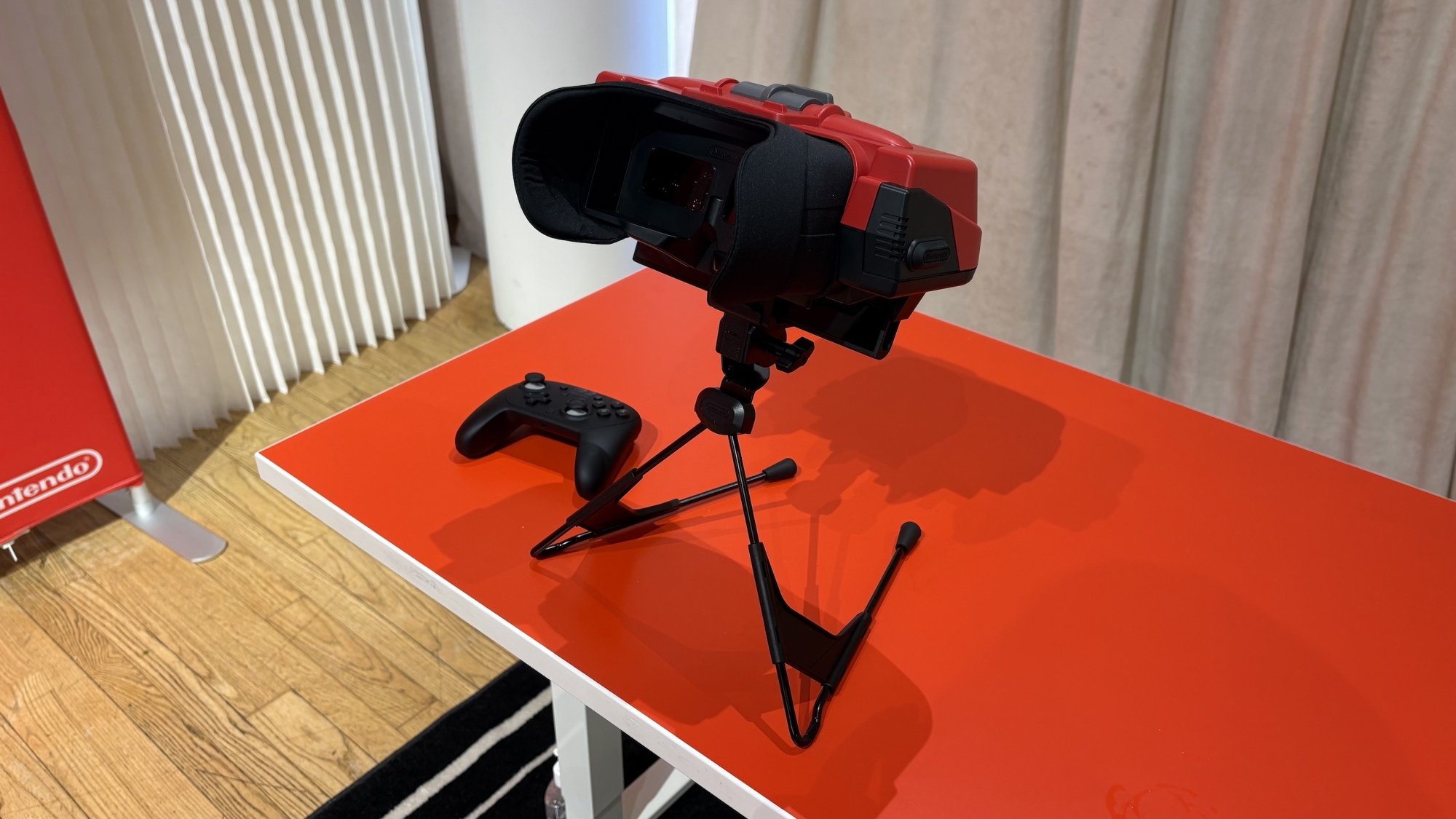
The Virtual Boy add-on for Switch works exactly like it should. You set it on a table in front of you, grab a controller, and stick your face into the machine. By default, games are displayed faithfully in red and black (though there are some new options that let you adjust that) and the stereoscopic 3D effect that defined the original hardware is in full force.
I suspect that’s the reason why you can’t just play these games on a TV — and after seeing them in action, I get it. These games were designed to only be seen in 3D, and as much as it sucks to charge $99 for the ability to play them correctly, I don’t think the novelty would exist to the same extent on a flat display.
Wario Land definitely seemed neat, especially with 3D background elements being relevant to gameplay sometimes, while The Mansion of Innsmouth was completely inscrutable.
The most vital aspect of all of this: after just a few minutes, my eyes and neck began to hurt and I had to back away. I got the same feeling of being disconnected from the physical world around me and needing to re-integrate with it as soon as I was done that I normally get from using modern VR headsets.
We’ve come so far in terms of VR tech, but for me that sense of dislocation hasn’t changed at all.
Playing a Virtual Boy after decades of just hearing about it was fascinating, if nothing else. I love that Nintendo is doing this, though I’m not sure $99 is worth it for the full experience, or that most of those games are worth playing for longer than five minutes.
There’s genuine historical value to Nintendo’s biggest gaming failure, and we should take it as a victory that Nintendo isn’t running away from it anymore.