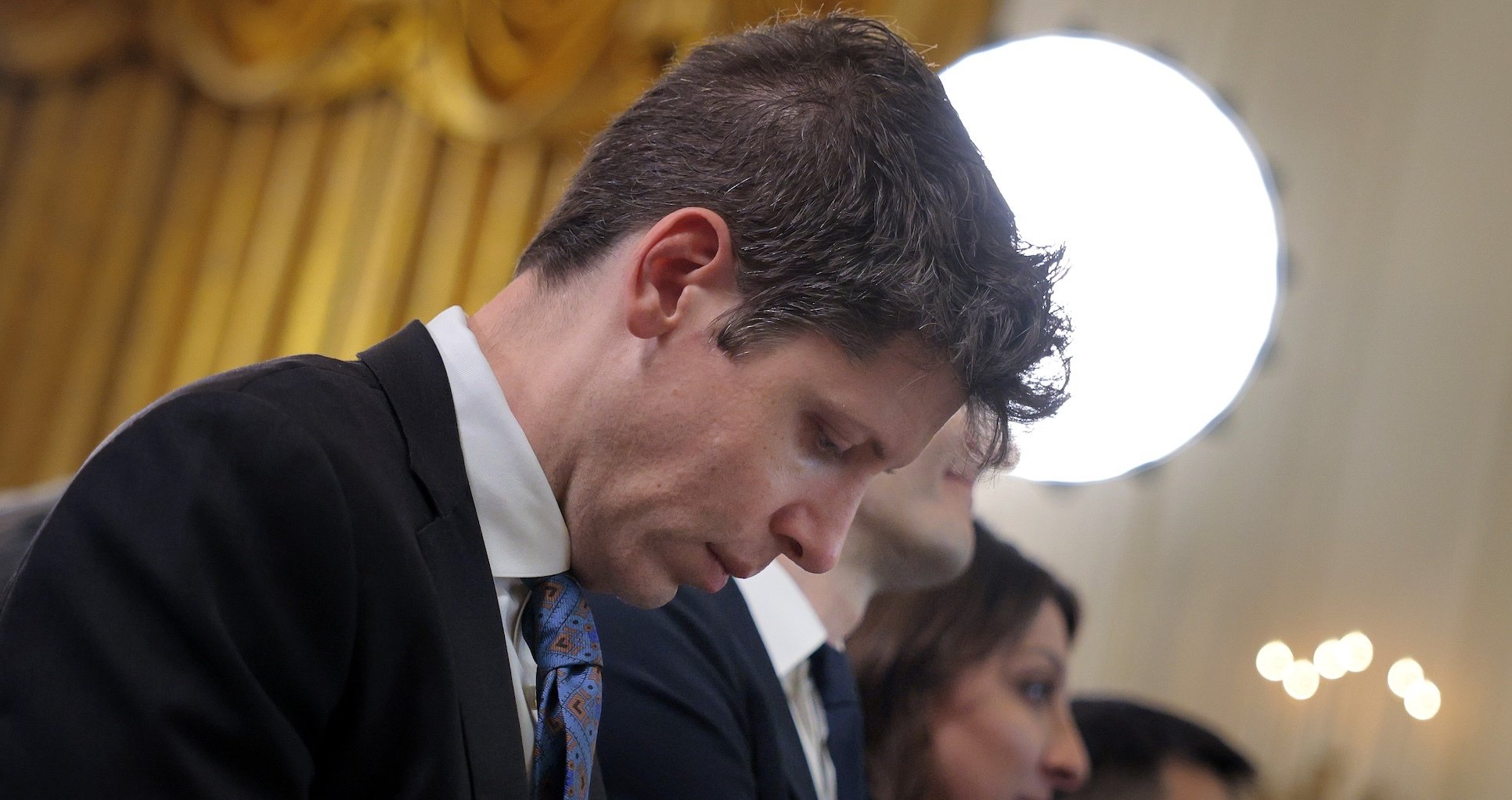
It’s hard to imagine a company appearing to put its thumb on the scale for another company more than Bob Iger’s Disney just did for Sam Altman’s OpenAI.
The very day Disney took legal action against Google for what it says is unlicensed use of its intellectual property, it also licensed some of that property for use in Sora, the video generator made by Google’s main rival, OpenAI. Just to make it clear which side of the AI feud the Mouse House was on, Iger also invested in Altman’s company to the tune of $1 billion.
But coincidence of the timing aside, it’s also hard to imagine the deal doing more good for Altman than it does for Iger.
OpenAI is spending so freely at the moment that $1 billion will cover 3-4 weeks of its estimated losses (see below for the math) or one-thousandth of its spending commitments.
Based on those numbers, OpenAI needs more than 1,001 Disney deals just to keep going. (Could be there’s a movie in that!) And now, on top of that, OpenAI will pay the world’s largest media company so its users can make a video using one of Disney’s approved characters.
Disney, meanwhile, gets a chunk of the company, the glory of being a player in AI, and a carefully curated, user-created stream of new content for Disney+. It’s lose-win!
Why would Altman accept a deal like that? Perhaps because of the sheer scale of the hole OpenAI is in. That scale may become clearer this month, in a flurry of investigations and estimates. OpenAI is in trouble, declared the Atlantic — and in one of the publication’s sickest burns ever, dubbed the ChatGPT maker the “Netscape of AI.”
(Netscape was also a pioneer of the web browser, but couldn’t compete when tech giants like Microsoft built their own models; in the end, AOL bought Netscape).
How much money is OpenAI really losing?
That takedown looked mild next to a typical tech journalist’s summary: “You have no idea how screwed OpenAI actually is.” (And that was written before the “Code Red” Altman declared last month, when Google Gemini was launched and OpenAI started hemorrhaging users.)
How screwed, exactly, is a moving target. Just ask Deutsche Bank, which also started hammering nails in OpenAI’s coffin this month. Deutsche analyst Jim Reid has estimated the company’s losses going forward at a staggering $140 billion, between 2024 and 2029 alone.
Given the commitments OpenAI has made to spending on new infrastructure — more than $1 trillion, or 1,000 Disney deals — Reid may be optimistic in suggesting the company will be around that long.
We can’t examine the books, given that OpenAI is also the world’s largest private company, but it seems Altman has fully embraced a burn rate of spending that makes the dotcom bubble era look sensible.
In the first half of 2025 alone, according to The Information, revenue at OpenAI was $4.3 billion; total expenditure was $17.8 billion.
“No start-up in history has operated with expected losses on anything approaching this scale,” Reid wrote.
No kidding. When you make a billion-dollar deal with Disney, and that deal covers less than one month of your losses, then … well, you too might have panic sweats. And you too might be looking for as many deals with as many more Disneys as possible.
Disney now joins the ranks of Softbank, Microsoft (which made its first $1 billion investment in OpenAI in 2019), or NVIDIA (which made a $100 billion deal with OpenAI that ties them into using NVIDIA chips). These are the companies you need in your corner if your cash is going to run out at any time.
Maybe you’d be looking for a bailout from one of these deep pockets, or all of them, down the line. Maybe you’d even be looking for a U.S. government bailout, as some sources suggest.
And maybe, if all is lost and OpenAI’s valuation heads south, you’d be hoping for someone like Iger to do for OpenAI what AOL did for Netscape.